The all-encompassing tag that Google hinted about during Marketing Live 2022 in May is now available. The company's Ads & Commerce Blog has the formal announcement.
The upgrade aims to simplify site-wide labeling and future-proof privacy issues. Google has frequently postponed the Chrome deadline for erasing third-party cookies, so it's still unclear what the situation is with them. However, website visitors anticipate cookie transparency. While enabling marketers to get precise data, the new tag seeks to allay these worries.
Only Ads and Analytics are covered by the tag, but more Google products (known as "destinations") are on the way.
Advertisers that already have the new version of the global site tag placed do not need to change the old one.
The new tag offers two main advantages:
- It works with many locations, reducing the need for code updates from developers for advertisers and website owners. For instance, it is no longer necessary to install a code snippet when clicking a button to measure ad conversions. fhpcn
- The tag is compatible with Google's additional privacy offerings. It also imitates Enhanced Conversions by returning data from users to Google.
Looking through the New Tag
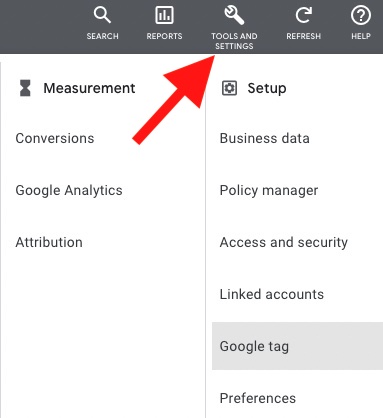
In the Google Ads interface, the new tag may be found under "Tools & Settings."
You may view the locations that are linked to your tag there. The tag is integrated with the Google Ads account in the example below.
There are eight options, some of which are new:
Take control of automated event detection.
- "Set your domains up,"
- Add user-provided information from your website.
- "Collect events from Universal Analytics,"
- Establish internal traffic
- List undesirable referrals
- Change the session timeout.
- "Reset cookie preferences,"
The new tag includes features from the old Google Analytics configuration, such data collecting and referral exclusions. Google is enforcing user privacy and measurement policies everywhere.
The updated tag has a useful change history report that shows who made the modification and when. A new domain-referral exclusion, for instance, can be included in the report and help to explain a traffic decline.
The following factors
The new Google tag has raised a lot of queries. Christophe Combette, head of Google's advertisements measurement tools, was questioned by Search Engine Land about the modifications, including if the tag syncs with Google Tag Manager. Combette retorted that it did, claiming that sites employing GTM don't need any adjustments.
In the next months, keep an eye out for further Google integration information.
The preceding tag does not have a deprecation date specified by Google. Advertisers can still modify the parameters, even if the technology is no longer referred to as a "global site tag."
Also take note that the new tag collects the same kinds of information that the old one did. Users may now create events straight from the Ads interface thanks to the code's improved efficiency.

Komentar
Posting Komentar